


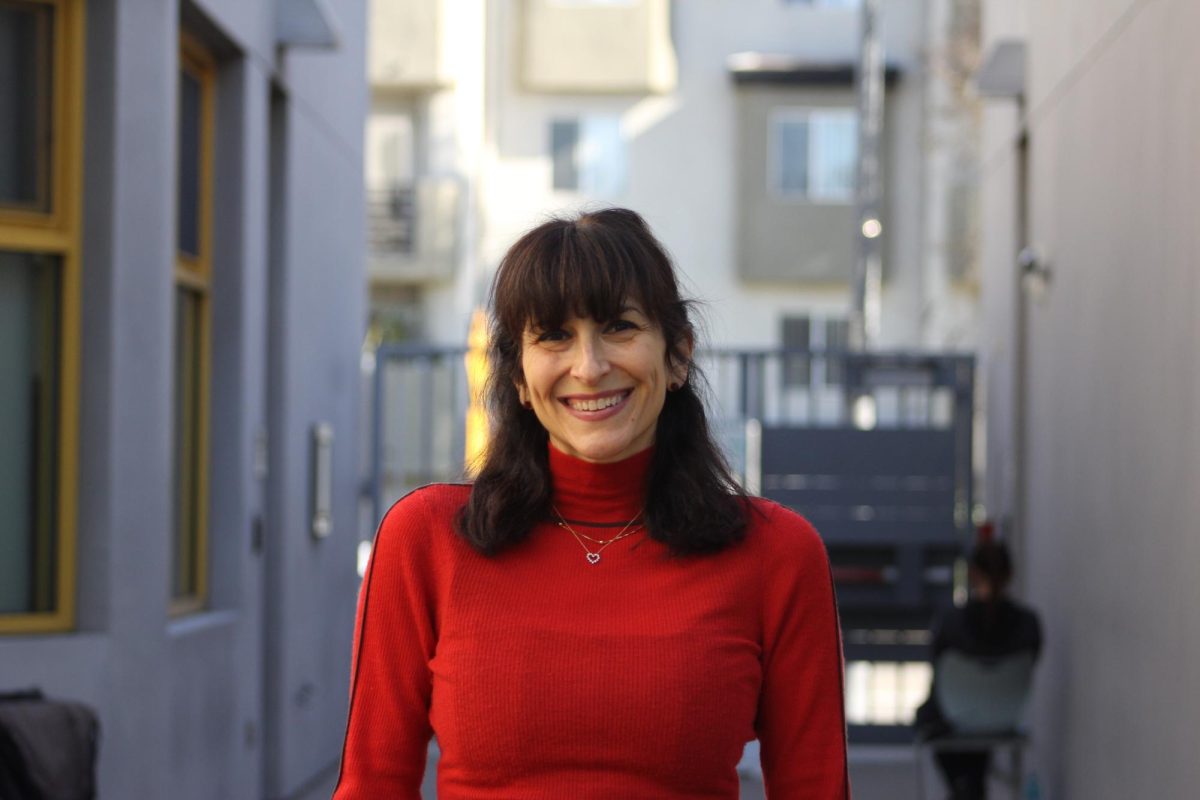




At seven years old, Campbell Hall Advanced Inquiry (CHAI) Language and Composition and philosophy teacher Dr. Kelly Kawar walked excitedly as she entered her preschool, located on the campus of a facility for people with developmental disabilities. After taking Kawar and her sister, Laura, to their classrooms, their mother, Mary Ann, stayed behind to begin her shift as a nurse. During the day, Kawar and her sister would look for their mom, watching as she stopped to speak to patients, some who were unable to respond physically, with a sense of adoration. Their eyes would follow her, attentively listening to the conversations she would have with them. When classes ended, Kawar waited nearby while her mother finished each conversation and then took her hand and walked on.
Growing up in this environment, Kawar learned to treat compassion as a practice rather than a concept; this practice was shaped largely by her parents’ example.
Kawar grew up with an interconnected family, seeing her extended family every weekend at family gatherings. Her parents always prioritized family, modeling compassion in everything they did for Kawar’s sister and their own siblings. Her father, Wajdi, would express this, extending any help their family needed, believing that any material he possessed was theirs as well. Once, while arguing with her father about not wanting to go to a family event, he taught her the importance of appreciating all aspects of life.
“He never argued with me but one day, he said, ‘You can’t just pick and choose, Kelly, life is everything,’” Kawar said. “And it stayed with me—it all counts. The baptisms, the communions, the graduations, the everyday struggle of life, all of it counts. My parents always said, ‘This isn’t mine, it’s ours.’ Especially my dad, [who] never bought anything for himself because he never allowed himself to place value in material wealth. As a result of that, any surplus of money that he had, he would save for others.”
This generous attitude towards life was also taught to Kawar by her mother, who strengthened this view through her practice of Catholicism. Kawar’s mother grew up in New York with eight siblings, surrounded by their Italian culture. After moving to California, Kawar’s mother wanted to continue the involvement in faith she grew up with, enrolling Kawar in Catholic school for twelve years. Despite not considering herself as Catholic as her mother did, Kawar found value in Mary Ann’s optimistic view of the world.
“[My mother] went through many challenges in her life and in spite of them, she never fell into any situation where she couldn’t be joyful,” Kawar said. “Not to say she was never angry or sad but she modeled how you can [experience] challenging times and still wake up and put a smile on your face. She taught me at a young age what unconditional love looks like and how to recognize the humanity in every single individual. To zoom in and decide to look for the highest potential in every individual.”
Kawar has learned, through the selflessness and faith her parents demonstrated during her adolescence, the importance of struggle. Their values allowed them to tackle challenges successfully, finding the value of adversity through the experience they gained. She believes that facing adversity with integrity, just as her parents did, provides her with an authentic way of living.
“I embrace struggles presented to me, not necessarily because I think I’ll [receive a] reward by enduring it but for the important knowledge of life I’ll have afterward,” Kawar said. “If you’re faced with a struggle and you don’t deal with it authentically, that sets you up for a pattern of inauthentic living. This isn’t something I have to work hard to understand, because it was the culture of my family.”