









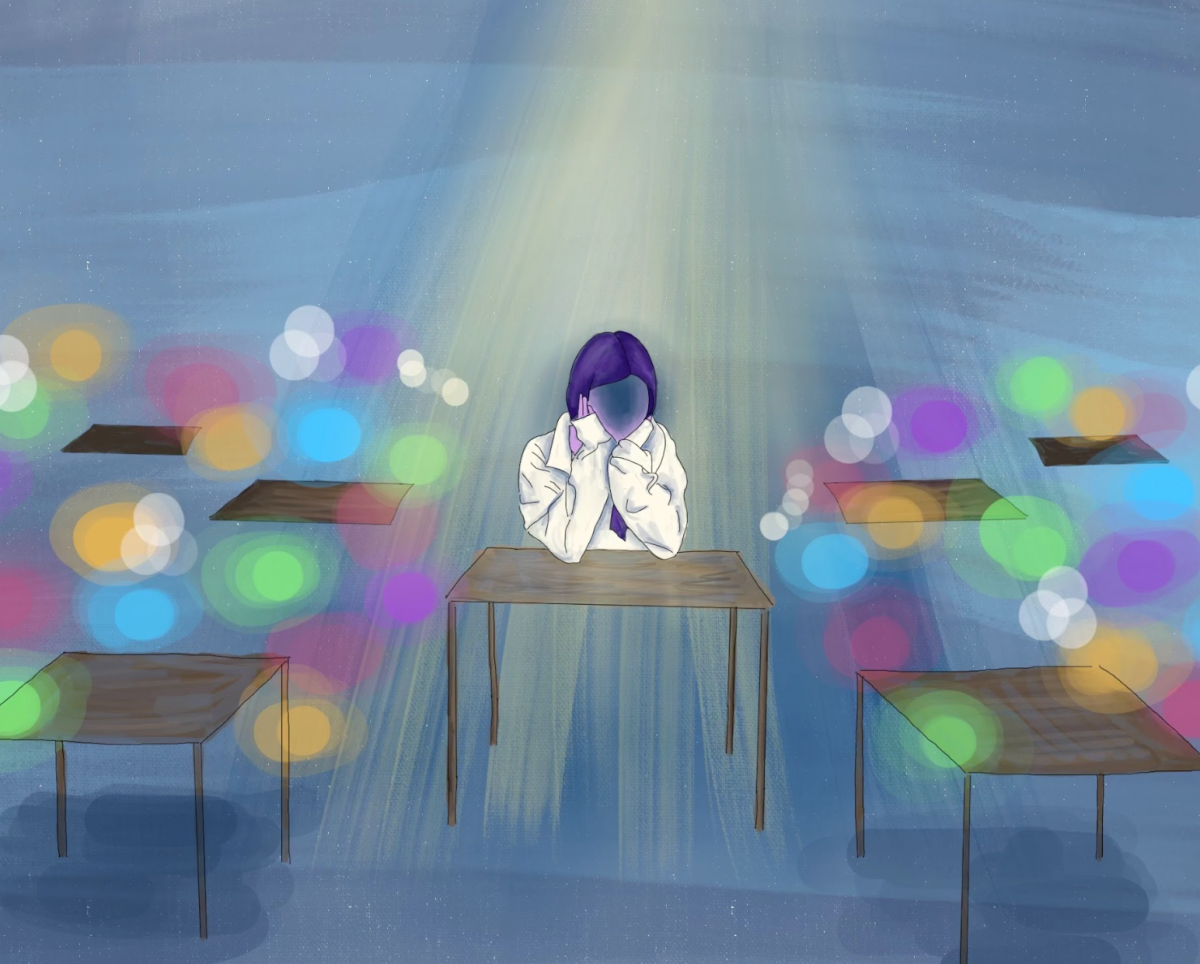


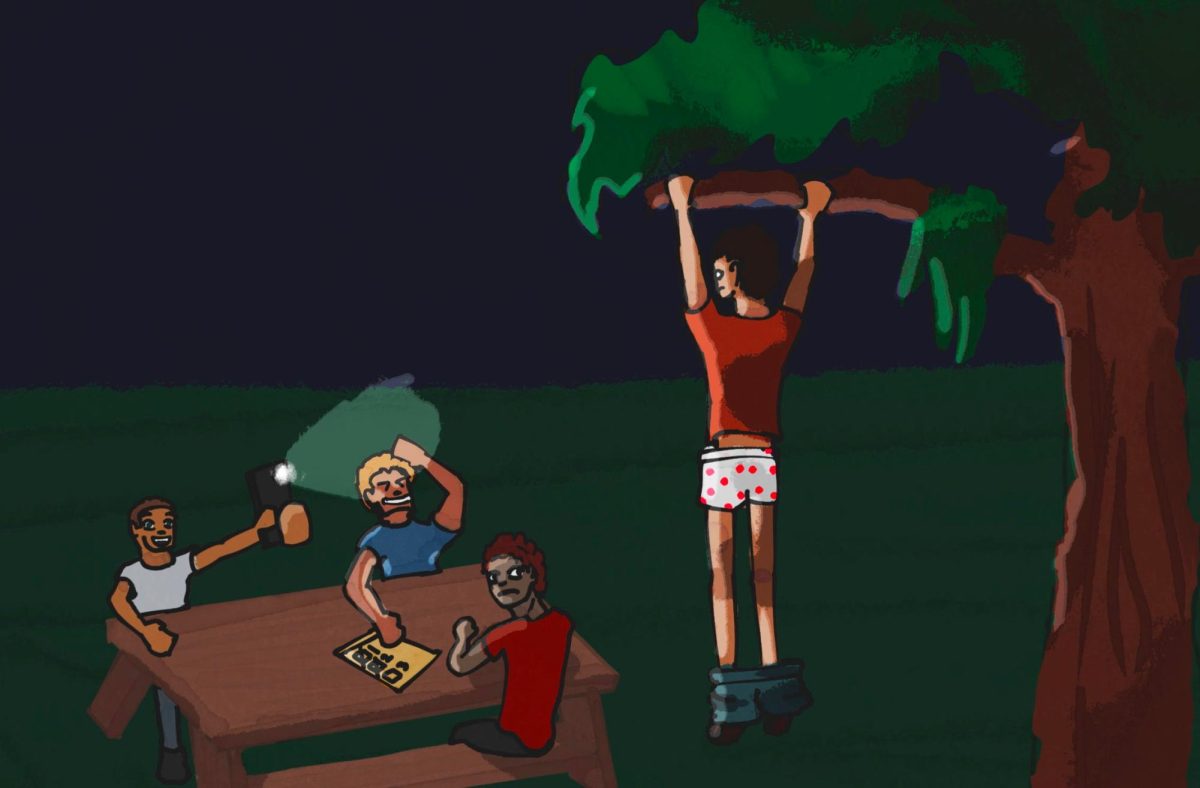



As the bell rings, Mabel Renfroe ‘27 is overcome with a feeling of inescapable dread. Dragging her feet as she reluctantly heads to her next class, Renfroe prepares herself for another period of quiet whispers and judgmental glances. She feels the classroom is run by popularity, each interaction seeming like a test of acceptance. For Renfroe, the grades that mattered most weren’t the ones written on the paper: they were written in the unspoken hierarchies that defined her school day.
Having been at Campbell Hall since kindergarten, Renfroe felt an immediate pressure to fit in when new classmates arrived in seventh grade. Her social life was shaped by a constant push and pull of trying to belong as she moved between friend groups, performing inauthentic versions of herself. This need to prove herself mentally drained her, and kept Renfroe from feeling secure in her own body. Her fear of judgment eventually seeped into the classroom, as she felt herself wanting to skip certain classes.
“Especially in ninth grade, I would be scared to go to my class with certain people, because they were all going to say mean things to me and it would really hurt my feelings,” Renfroe said. “I couldn’t even learn in that environment because I just felt like anything I would say or do would be dissected and made fun of. It was so draining to feel consumed in their judgment.”
Similarly, the middle school classrooms became a feared environment for Lily Rebhun ‘29, who acknowledged feeling silenced by loneliness. Looking back, she recognizes that without a strong social network, it was easy to be controlled by a fear of being judged or dismissed. The absence of close friends suppressed Rebhun’s confidence, which she understands prevented her from participating in activities like class discussions, even when she knew the answers.
“I feel like at my lowest socially, I couldn’t fully express myself in class because I felt like everyone around me would constantly just make fun of me or think I’m stupid,” Rebhun said. “I had this fear of using my voice because I was so alone and I didn’t even know if I wanted to be heard.”
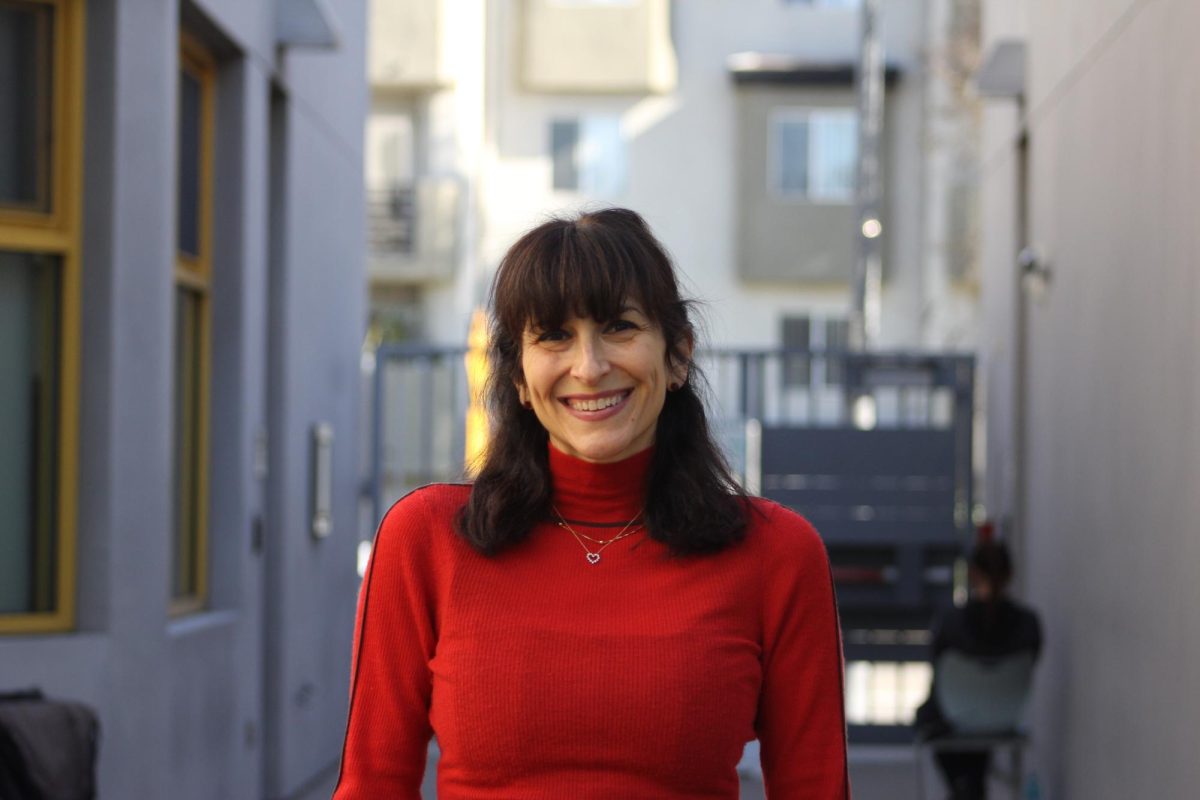
A May 2017 article from Paradigm Treatment, a mental health treatment center from teens and young adults, emphasizes the importance of friendship to a child’s self-esteem, explaining that without it, children are bound to fall into unhealthy habits, which may impact their overall well-being. School counselor Danielle Fee echoes that sentiment, noting the subtle ways social isolation can affect a student’s behavior and mindset.
“[Those who feel more socially isolated come to school] a little bit more aware of their daily actions because they want to be accepted and feel belonged,” Fee said. “Because they don’t feel that way quite yet, they’re almost overanalyzing things they’re doing because they want to be accepted.”
On the contrary, Fee notices that being socially engaged and accepted elicits a sense of belonging and comfort that encourages students to participate in class or focus on work. However, when social relationships are not reinforced by healthy communication, the stress levels associated with those relationships will take an inevitable toll.
“[Connection is] a part of who we are, as humanity, we need it,” Fee said. “We need that connection to be seen and to be witnessed as a person. So if an individual is not feeling that they’re receiving that from their soul support systems, that can be detrimental, and then there needs to be a change so that that person does feel like they belong.”
While experts like Fee emphasize the importance of connection, students like Nikita Kochnev ‘26 illustrate how finding that connection can become pivotal in transitioning between schools, providing stability amidst uncertainty. He remembers an initial feeling of discomfort because friend groups were already established, and he didn’t know where he was going to fit in. However, he found a sense of belonging with the basketball team. He acknowledges that the connections he built with his teammates helped him feel more comfortable and confident in his new environment. For Kochnev, being part of a team gave him a safe space that encouraged him to come to school motivated and eager.
“Your social group is what makes you who you are,” Kochnev said. “You learn and grow together as a unit. I think it plays a huge role in one’s identity, but especially in their overall feeling about school. Having that security allows you to have that safe space between classes or at lunch.”
Like Kochnev, Jonas Diamond ‘28 understands the crucial role friendships play in a student’s relationship with school, not just helping them feel secure in their environment but shaping how motivated and excited they are to come to school each day. Upon arriving at Campbell Hall in seventh grade, Diamond was fortunate to find a supportive group of friends early on. He recognizes that these relationships transform his daily experience at Campbell Hall. With a readiness to socialize and branch out, Diamond feels a sense of enthusiasm and drive that comes from knowing he has people he looks forward to seeing.
“I think that [having a secure group of friends] makes it a lot more fun and enjoyable to come to school,” Diamond said. “There’s more excitement coming to school or after a break because there’s a desire to see your friends and to talk to them, and feeling lonely or not having the friendships I’ve been lucky to build, I feel like there wouldn’t be anything really keeping me motivated or driven.”
Having moved to many different schools, Kochnev can now reflect on the peace that process has brought. He has grown to accept that things happen for a reason, which has provided him with an understanding and acceptance of his journey and the person he is becoming. He has a better recognition of what it means to find his people, and attributes his ease and comfortability in himself to the resilience he built through the challenge and change he’s adapted to along the way.
“Maturing over time, I realized that I don’t need to fit in in order to still be happy with myself,” Kochnev said. “It was a little hard at first, coming from a place where I saw my friends every single day at school, but it was just a different environment, and I recognized the personal growth in learning how to come outside of myself.”
Like Kochnev, Rebhun has seen growth in her own journey. She remembers the pain of low self-esteem, but now feels a sense of pride as she reflects on how she’s changed. Rebhun understands that her social struggles ended up being a blessing in disguise as she now draws strength from other parts of her identity. She notices a deeper sense of confidence that has allowed her to branch out and take up space in ways she once hesitated to. Although she acknowledges the lasting presence of social pressures in high school, Rebhun chooses not to let them define her.
“I’m learning to reject that pressure people have to fit in,” Rebhun said. “Shoes you wear, backpacks you have, there’s so many things like that I just don’t care about anymore because I’m so much more confident in myself and I know that who I am is reinforced by who I am fortunate enough to surround myself with.”
Renfroe recognizes that her journey has been filled with challenges as well, but she feels more of a reward in her growth because of what she has gone through. To be able to look back on who she has become has been special for her, and she is proud of the way she now treats others and herself. Renfroe feels a new confidence in how she carries herself, and understands the importance of surrounding herself with people who uplift and support her.
“I have so much more internal confidence because I know my worth and I think having good friends who uplift me and support that has really made a difference in how I view myself and view others,” Renfroe said. “Learning to love yourself isn’t as easy as it sounds, but focusing on what brought me small joys made all the difference. I feel more centered now, and I think [finding those joys] helped me feel worthy of the love I’ve always wanted to receive.”