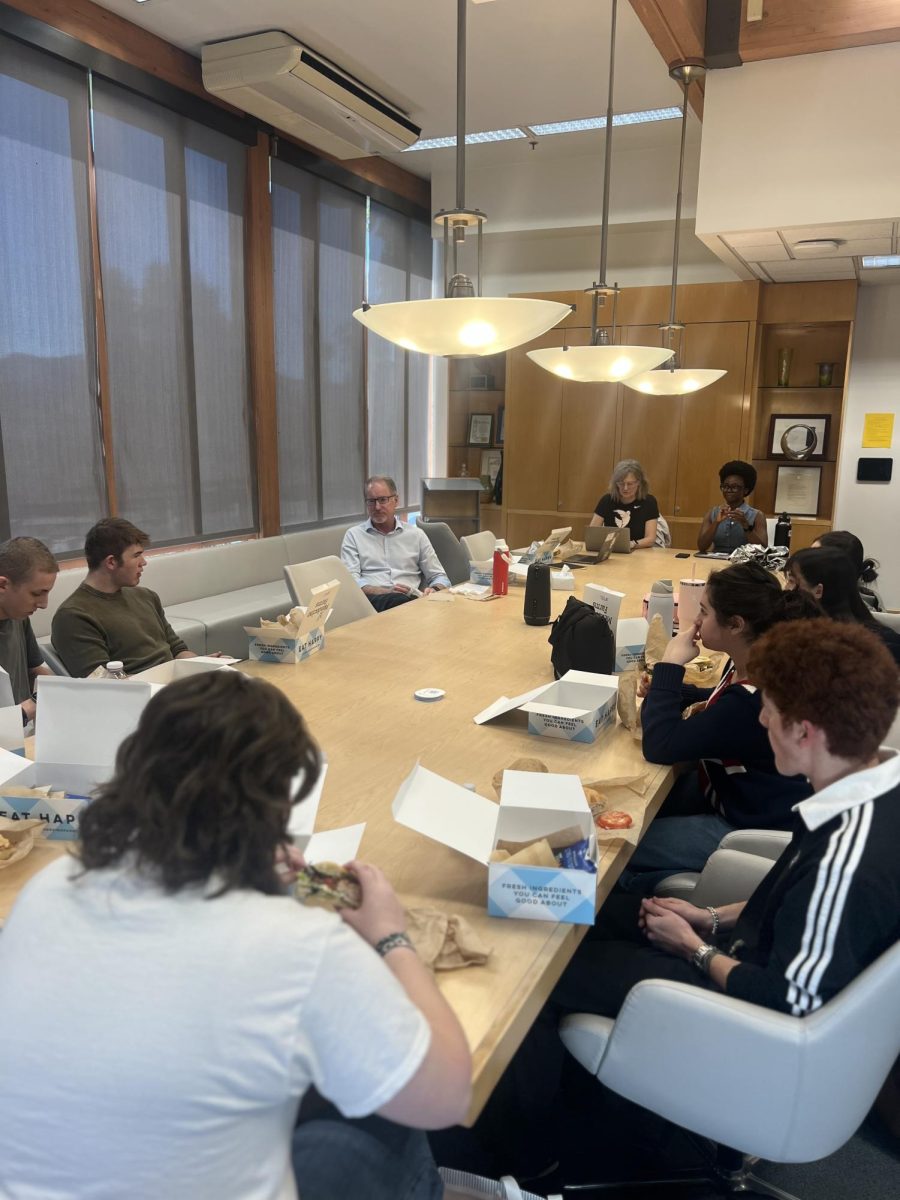
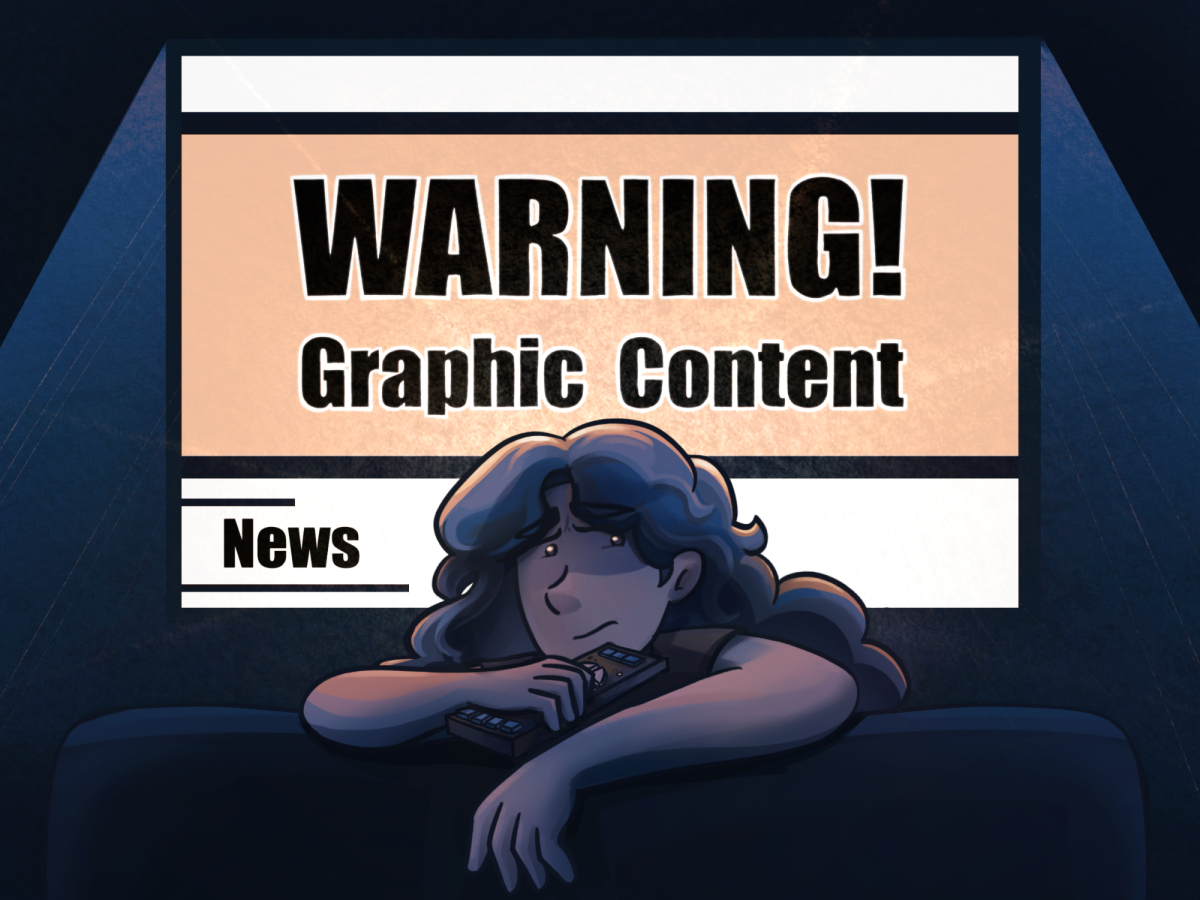

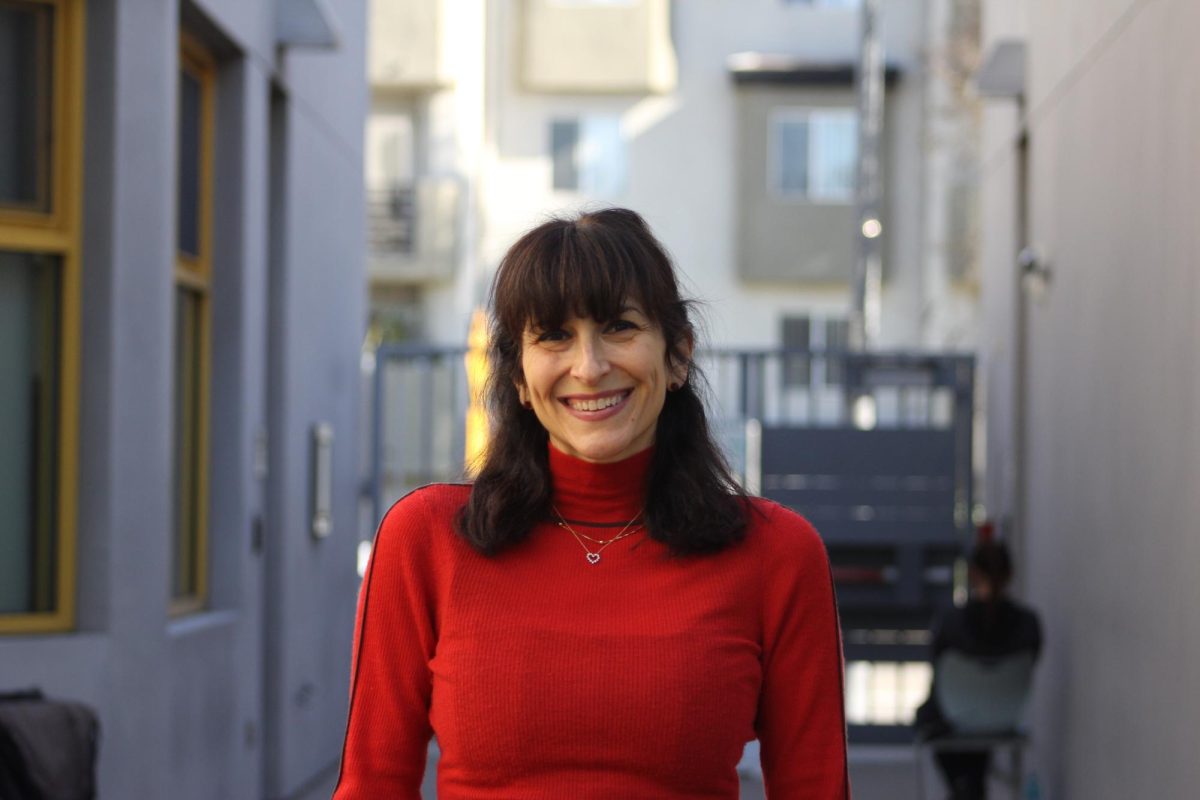


As high school history teacher Dr. Valerie Jiménez announces a new project for her CHAI US History classes, Lily Sands ‘27, Lyla Grossfeld ‘27, Kenzie Sands ‘27 and Bronte Clarke ‘27 begin brainstorming for their recreation of a 19th-century newspaper on any topic of their choice. Along the way, they thought of a political issue that they would want to research–white supremacism and the KKK–and wondered how they would navigate it.
Jiménez’s classes were assigned to write a 19th-century review, looking back at the century and its historical events. As a group, students came up with a theme, such as a ladies’ journal or a working-class newspaper. Then, from there, students picked any kind of topic that would fit for that demographic or audience.
In one of Jiménez’s classes, L. Sands, Grossfeld, K. Sands and Clarke debated on reporting on the KKK. However, L. Sands, and K. Sands began to worry as they did not want people to view this choice in the wrong way. Since L. Sands and K. Sands are siblings, they discussed with their parents about their digital footprint and how colleges might interpret their project.
“[My dad] was [saying] maybe it’s too risky, especially if you were going to submit it for a college portfolio,” L. Sands said. “Or [even] if it’s getting out a little bit too far, just past history class, and other people not in Campbell Hall—of course, we don’t support stuff like that, but people who really do might see that article and then reach out to me and harass me.”
According to Lyss Welding at BestColleges on June 7, 2024, less than half of students feel comfortable expressing their political views on campus, however, another project member, Grossfeld, was on board to research a politically sensitive issue. Grossfeld believes that the school should allow students to write anything if they are educated enough on the topic. She did not worry about choosing politics as a topic for this class project, yet she knows there are precautions to take.
“I think [topics] become too controversial if you don’t think you can talk about it in class,” Grossfeld said. “If you would be nervous that people would get mad at you or that it would be a controversial thing to say to your friends, then I don’t think you should write that.”
Grossfeld’s commentary in her group is similar to K. Sands’ rationale. K. Sands notes that in the future, she will continue to investigate issues and do projects on her passions and what she stands for rather than hide what she believes.
“I probably don’t mind covering political issues,” K. Sands said. “I think it was just being Black and covering the KKK; I feel like those two things are so important to each other. I think that’s why it was risky in the first place. But other than that, I don’t mind covering political issues.”
For several years, Jiménez notes that students can have differing perspectives from hers and she supports them the best she can as a teacher, with guiding questions and timely feedback. For her, it is important for students to learn to support their perspectives with evidence they gathered using research.
“I think a lot of things can be controversial and it depends on how you interpret them,” Jiménez said. “We’ve had students who made a really excellent newspaper that was very pro-imperialism—why imperialism was important for the evolution of the country at this particular time period. I didn’t necessarily agree with their ideas, but they were really passionate about it and got really invested in the project and did all these extra columns.”