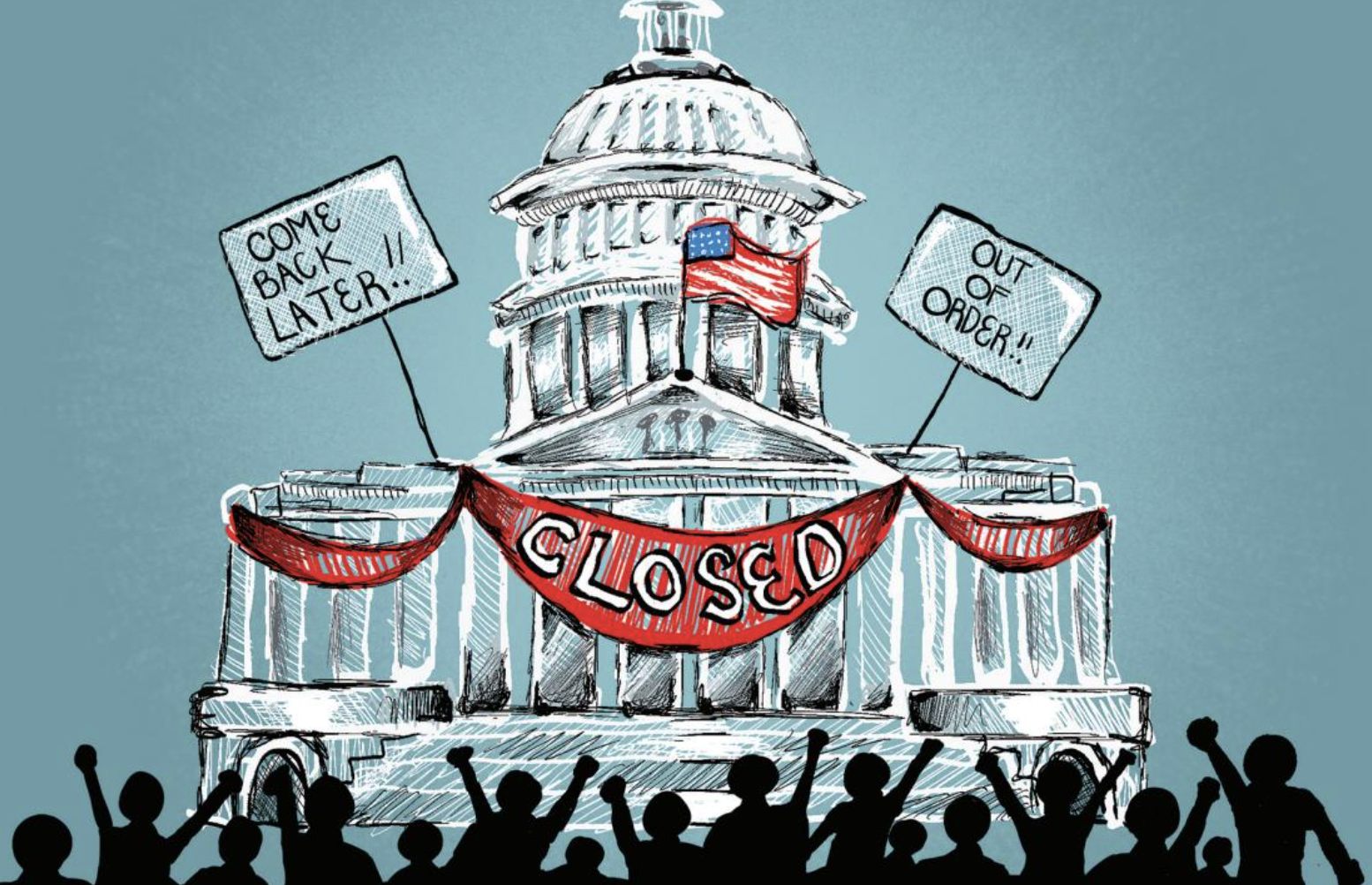

The 2025 shutdown impacted small businesses across the country, freezing access to new Small Business Administration (SBA) loans, which are essential for a business’s growth. These loans often serve as a lifeline for the small businesses that rely on them. Without the ability to process these loans, small business owners are left in limbo, un-able to grow or sustain their businesses.
“Let’s just assume you had a contract with the government, and now the people who pay you aren’t at work anymore,” Sands said. “So now you can’t receive those funds, and then you can’t pay your employees, or you can’t help them. Imagine people not hav-ing access to food or their children not having access to food, well, that causes stress on an employee, and then they can’t perform their job as well.”
For small businesses already navigating tight budgets, the conse-quences can be severe. With reduced access to capital and govern-ment contracts on hold, some owners were forced to make difficult choices just to stay afloat. The effects of lost federal support spread throughout the broader economy, reaching nearly every corner.
“The federal government is the world’s largest employer,” Sands said. “Whether we like it or not, everyone is connected to it, whether it’s schools, resources or businesses. You don’t want that capital to stop flowing inside the economy. No matter what, everyone will feel that effect.”
The effects of the shutdown aren’t just hitting business owners: they’re rippling through the city, impacting its residents. Los An-geles Councilwoman Traci Park, who represents the city’s 11th district (CD11) on the westside, has seen firsthand how the feder-al government shutdown is impacting the Los Angeles community. In her district, vulnerable families, seniors and immigrant residents face growing food insecurity and financial hardship as federal assistance programs are disrupted.
“It’s incumbent upon us as a city to keep a very close eye on where the vulnerable communities are being impacted and then offer what we can to try to supplement,” Park said. “It is the people who need the help the most that will suffer the most as a result of this. Vulnerable families, people in the margins, folks that are already working two or three jobs just to pay rent, our seniors who depend on food support and other benefits.”
We have a lot of families that struggle with housing and food security. That compounds the issue for people who are already struggling to pay their rent and to buy food. The loss of that food support has been a major concern.
Traci Park
To help ease the burden on residents, Park’s office has been ac-tively partnering with private organizations and city leadership. Currently, the CD11 has coordinated with Mayor Bass to dis-tribute Angelinio cards to families in need and has created rental assistance programs. These efforts, along with collaborations with local non-profits and corporate partners, aim to provide immedi-ate relief for those struggling with housing and necessities.
“As a local elected official, the closest to the everyday people who live on the west side of Los Angeles, my role is to make sure that our essential services continue uninterrupted and that the needs of our residents continue to be met,” Park said. “When you have a supply chain shortage, which is what shutdowns lead to, the eco-nomic impact is higher prices. We have a lot of families that strug-gle with housing and food security. That compounds the issue for people who are already struggling to pay their rent and to buy food. The loss of that food support has been a major concern.”
In addition to financial relief, Park’s office has worked to strength-en community and safety support networks. They teamed up with philanthropic partners to create a rental assistance program and with corporate organizations like Amazon to support local food pantries, including organizations such as St. Mark Parish, which serves about 400 families a week. These efforts, along with collaborations with local nonprofits and city partners, aim to pro-vide immediate support to families navigating the uncertainty of the shutdown.
“When the government shuts down and funding resources aren’t available, the programs and services come to an actual halt,” Park said. “Making sure that at a city level we are able to offer backstops to some of that and really lean in with our community partners to supplement those needs [is essential].”