Fiore C
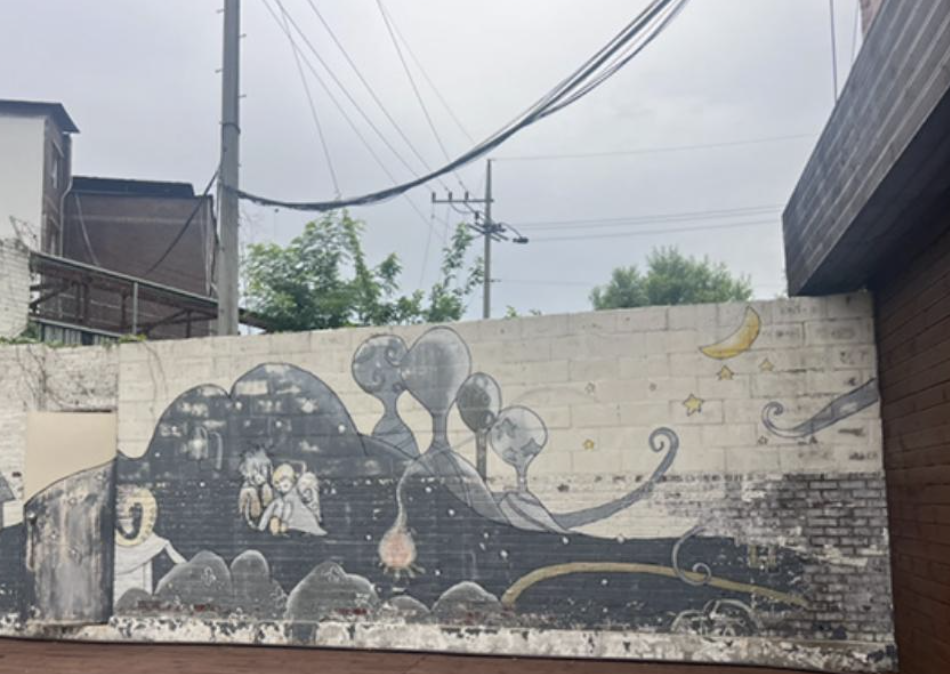
Painting tribute for mental health: A painting outside Somang and Hyundai Hospital in South Korea Fiore Chung '26 visited, dedicated to autism awareness.
When I shadowed the attorneys at the Office of Diversion and an W Re-entry Court, I observed count-less stories and mental health cases. Located in Downtown, the attorneys attempt-ed to steer defendants dealing with mental illness and homelessness away from the criminal justice system and into treatment and housing. I witnessed how psychiatrists worked with attorneys, law enforcement and judges to help mentally ill people reintegrate into society while protecting public safety. However, I also realized the differences in societal treatment for people with mental illness.
After listening to countless check-ins and court cases, I found a pattern. How are things going in your plan? The judge asks questions, asks how their treatments are going, primarily for drugs, and schedules future court dates. Some people were online, and some people came in person. There were observers in the audience: hopeful family members and spectators. Some were given tasks: Go to two AA meetings a week. Quickly, I became used to coming to the court every day. I made friends with the deputy, who gave me snacks and Oreos during break, I bonded with one of the Public Defenders, and I recognized other teenagers in the audience who were also there observing. Taking my seat in the jury area, the deputy told me to sit comfortably there, I found something new to learn every day. Every individual had a different story, and hearing about these people’s circumstances did not make me scared of them as others told me I would be.
In one day, the judge gave numerous lives an-other chance at life. Although some defendants had been struggling with their addiction and failed their treatment plan, the judge graciously gave many another chance, depending on their circumstances. I also admired how the judge remained composed and helpful to the defendants, even after a long day of similar cases. These chances left multiple people crying, families smiling and gave me a sense of relief. I knew that a second chance was what we all needed in our lives.
As one of the new additions to the court system, I had often wondered why a mental health court had not been implemented sooner. This led me to think there should be more equity for mental health support systems. But what could we do?
First, the stigma surrounding the most vulnerable populations and minorities must be eradicated. There is a lot of misinformation and misconceptions around individuals who are just as similar to you and me. Even when I told my friends that I was interested in this field, I was met with criticism and uncertainty. It starts with empathy, helping others who need it most and providing accessible support systems.
These are changes that can not be done over-night and certainly not alone. To do my part, I interned at Somang and Hyundai Hospital in South Korea over the summer. Again, I received similar feedback: Why would you go to a mental hospital? Isn’t that dangerous? Aren’t you scared? It may seem scary, but it is mostly the unknown that scares us. Not understanding people leads to the worst, and I knew that I had to realize the mis-conceptions placed before me.
I shared stories, danced alongside patients during their therapies and I met the nicest people I had ever known. It was a bubble of a supportive and loving community. Even the social workers and psychiatrists all supported me with grateful words for my work. Since then, I knew that there was something bigger than the misunderstood to be afraid of; misunderstandings were the root of ev-erything.
In the future, I will take these lessons and stories to advocate for accessibility to mental health support. The mind is a part of our body, so why should we take any less care of it? Just like how we do check-ups for our bodies, we should be checking up on each other and being able to receive help when we need it.