Gianna J
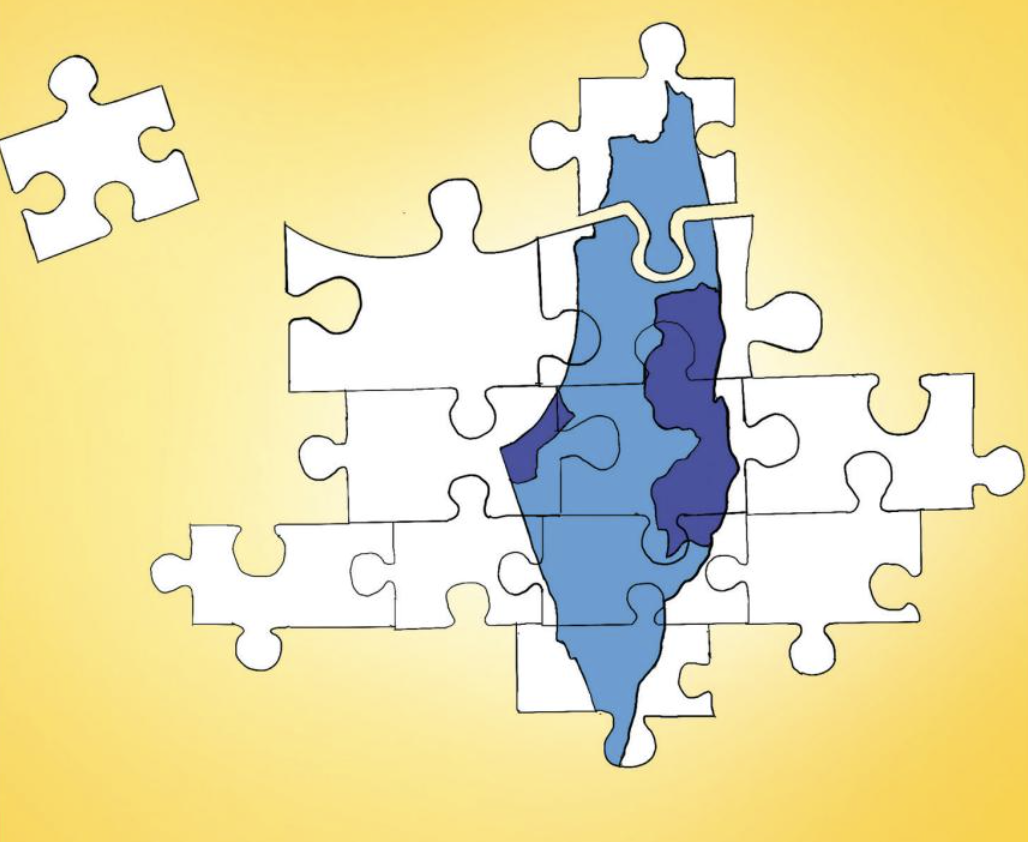
Piecing together the history: Puzzle pieces of the Israel and Palestine region come together through the independent study.
A brief unit in a tenth-grade history class on the Israel-Palestine conflict sparked curiosity and engagement for students Eli Reyblat ’26, Franny Leon ’26 and Asher Avisar ’26. Once they realized they all had different political opinions, they turned their differences into an opportunity to deepen their knowledge of the conflict.
Independent study projects allow participants to explore passions outside a classroom with no curriculum, expanding their understanding of chosen topics.
When Elena Malone, Campbell Hall Academic Inquiry (CHAI) Modern World History teacher, was initially approached to help start and advise this independent study, she was interested in learning about the conflict in an academic setting. However, she wanted ground rules to help manage the course. Malone regulates class discussions by emphasizing source analysis and recognizing that sources can carry bias. The students must ex-amine biases, context and evidence.
According to an October 2025 BBC article, the Israel-Palestine conflict stems from more than a century of tension regarding land, identity and national rights. After World War I, Britain took control of Palestine, then inhabited by an Arab majority and Jewish minority. Following the Bal-four Declaration’s promise of a Jewish homeland, Jewish immigration increased, especially after the Holocaust. In 1947, the United Nations (UN) proposed partitioning Palestine into Jewish and Arab states, which the Arab nations rejected. Israel declared independence in 1948, sparking a war with neighboring Arab countries. Israel emerged victorious, but Palestinians call this event the Nakba, which means “the catastrophe” in Arabic. After a series of wars throughout the 20th century, Israel gained control of the West Bank and the Gaza Strip. The West Bank remains under partial Palestinian governance but is fragmented by settlements that the UN has deemed illegal. In Gaza, Hamas took control in 2007, leading to repeated wars and what the UN has characterized as a humanitarian crisis.
Recent years have seen international pressure for peace, recognition of Palestine by several nations, and a cease-fire under the U.S. brokered plan. Still, the core issues statehood, refugee status and recognition remain unresolved.
When advising this study, Malone knew it was important to acknowledge that each student brings a different perspective, which is rooted mostly in familial or personal connections. She saw that independent study allowed students to engage in viewpoints that differ from their own. She finds it important for students to develop the skill of discussing controversial topics and form their arguments while maintaining respect for their peers and genuine curiosity for the subject.
I want my students to leave here able to have these conversations outside of school whether it’s about Israel-Palestine, genocide, social media access, anything controversial so they’re practiced in having hard conversations.
Elena Malone
“Controversial topics need to be discussed,” Malone said. “I want my students to leave here able to have these conversations outside of school whether it’s about Israel-Palestine, genocide, social media access, anything controversial so they’re practiced in having hard conversations.”
Since the start of the independent study, Avisar has maintained a similar goal to Malone’s: creating an independent study that focuses on the value of learning rather than avoiding a topic because of its controversy. He admires the group’s diverse opinions and how he and his peers are educating themselves about political affairs without disrespecting one another or damaging relationships. Avisar acknowledges how each student cares deeply about the topic, and he appreciates how they have created an opportunity to discuss the conflict in an academic environment.
“It’s for our own education, learning for the sake of learning is valuable,” Avisar said. “However, it’s also preparing us for college, where this topic is heavily debated, and being able to understand and empathize with others’ perspectives will help us navigate those discussions better.”
Like Avisar, Leon shares the sentiment of understanding different perspectives on the Israel-Palestinian conflict. Leon’s initial goal was to challenge her own bias so that she could reach accurate conclusions on the issue. She believes the biggest challenge with this independent study comes from the misinformation rampant on the internet about this topic, which motivates the group to understand the historical context of the issue.
“There’s so many political, social and moral issues that are at play here,” Leon said. “The whole conversation is oriented around bias and motivation, just as much as it is about what these people are actually saying and why they’re saying it.”
Reyblat understands the difficulty his classmates have had in understanding the various perspectives of this issue. Rather than feeling overwhelmed by the challenges and vast topics the study covers, he hopes to gain a worldly perspective that prepares him for debate on this relevant topic. He believes his ability to argue for both sides would reflect his knowledge of the subject, something he values more than the idea of being right.
“I hope to gain the ability to talk about the topic for 30 minutes without notes,” Reyblat said. “To have this in-depth knowledge of it that we know comes from historical basis, to be able to defend both sides. That’s one of the best ways to show a high degree of understanding is if you’re able to defend both sides.”