Gianna J
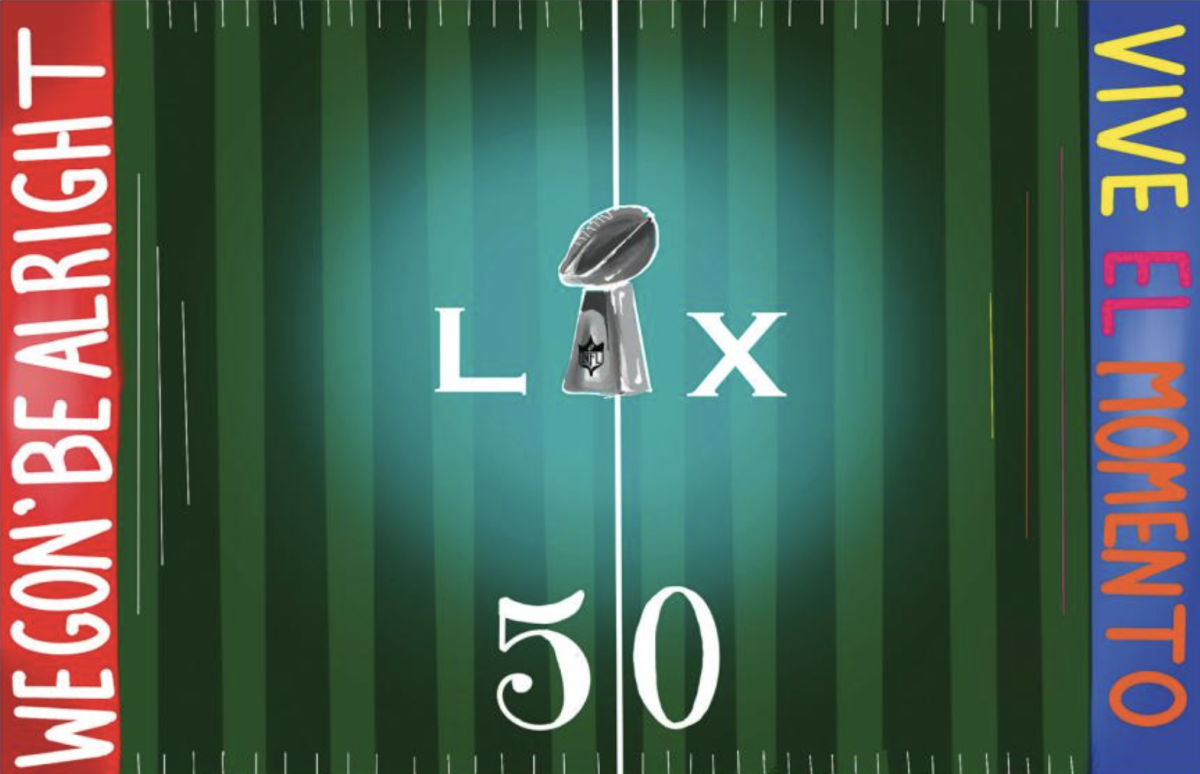
Stadium lights, huge audience, eye-opening performances. Every year, the Super Bowl brings artists from all over the world to perform on one of America’s biggest stages. This year, Puerto Rican artist Bad Bunny will perform his beloved songs-defying language barriers and breaking through stereotypes. For some students, this performance is not just entertainment but a crucial moment for representing Latino voices across the world.
According to NFL.com, Bad Bunny has used his music to stand for cultural pride, resilience and political expression. He’s a vocal advocate for Puerto Rico and uses his platform not only to celebrate his community’s heritage but to challenge injustice and amplify the voices that are being silenced. Since the announcement of his performance, the National Football League (NFL) and Bad Bunny have faced backlash for his vocal opposition to President Trump. He avoided shows in the U.S. because he was concerned with the U.S. Immigration and Customs Enforcement (ICE), as well as the mass deportation of Latinos. Through some of his songs like “NUEVAyol”, he lyrically critiques anti-immigrant rhetoric and openly voices his opinions online.
Victoria Hernandez ’28 is an avid Bad Bunny listener and loves that the NFL chose him to perform at the halftime show. She sees how the messages in his music encourage her and others to embrace life’s moments. She believes his presence on the big stage will represent something bigger than just a performance and possibly spark a positive change for the Latino community regarding the backlash they’ve been facing.
“He’s a role model, and really shows me how to live in the moment and focus on the little things,” Hernandez said. “He helps people come together in their families and really cherish the moment. It’s a super big thing, the halftime show, everyone’s gonna see it. It’ll bring people to reality and see what’s really happening, and maybe something will change.”
While Becket Morritt ’26 doesn’t listen to Bad Bunny regularly, he views the Super Bowl as a major representation of America. He believes the halftime show has become a platform for artists to address world issues, and hopes Bad Bunny’s show will hold significance for the Latino community.
“Last year, Lamar’s performance was a little controversial, but having Bad Bunny perform, who is Latino, means a lot because we’re at a time where we need more Latino movement,” Morritt said. “Having him go up is showing how many Latinos we have in this country, and I guess people are mad because they don’t want that right now. I don’t think it’s [the artists’] responsibility to perform for anything, but it’s such a global stage to push for change. It’s amazing that they fight for those kinds of things like representation with the power they hold as artists.”
Like Morritt, Carys Johnson ’27 recognizes how performers of color at the Super Bowl spotlight diverse voices. She believes Bad Bunny’s decision to perform was justified because he’s representing Latinx culture on one of the world’s biggest stages while standing his ground as an artist.
“The halftime performance is going to be really important this year, and I think Bad Bunny is going to make a great political statement at the Super Bowl,” Johnson said. “Artists should use their platforms to show who they are and what they believe in during these performances because that’s what performing is all about.”
Gigi Johnson ’27, a Bad Bunny fan, was excited to learn about his Super Bowl performance, given his advocacy for the Latino community. She believes that, given today’s political climate, the NFL has made excellent selections. She acknowledges that artists must leverage such massive platforms, especially Latino artists, given current hardships. Over the past two years, she’s noticed the halftime show evolving beyond entertainment into performances that reflect meaningful change.
“They’ve highlighted more diverse voices than they have previously, especially with Kendrick and Bad Bunny,” G. Johnson said. “They have a lot of underlying messages in their music, but are very vocal about their politics, beliefs and morals. That reflects in their performances in the Super Bowl, so I feel like it represents something larger.”
G. Johnson anticipates the show because Bad Bunny can represent his community and those whose freedom of speech has been limited by ongoing mass deportations. She hopes critics will be confronted, while others find inspiration to stand against inequality. She views his performance as pivotal for Puerto Ricans, immigrants, and the Latino community.
“I really hope that the people who have something to say about what he stands for are angered by his performance and his ability to be on stage and sing for what he believes in,” G. Johnson said. “I hope people get inspired by what he is performing about, and I think it’s really important, especially for Puerto Ricans. A lot of immigrants in this country are being challenged by the administration, and this is a great artist to be performing who identifies with that grief.”